GM: Designing Disaster-The Camaro Concept will be one of the last deck chairs General Motors gets to rearrange before submerging.
-Looking at the last decade, it's clear GM let themselves forget who really pays those pensions.
It’s proving an impossible task to look over any media coverage of Detroit’s North American International Auto Show (NAIAS) without seeing a picture of the Camaro concept on the cover or splash page. On the heels of bankruptcy rumors and frenzied industry pessimism, the stakes had never been higher for the one of the show’s legendary unveilings.
Those unable to make it to the show had to watch GM’s webcast of the unveiling, along with its baffling prelude. Only true car fiends were able to endure watching a high-school marching band doing their thing for five minutes before we could catch glimpse of the upcoming keeper of the famous pony car flame. And really, after seeing the concept which would hope to save GM, a marching band seems an appropriate introduction. The concept design is gaudy, obnoxious and without direction. Like the efforts of teenaged nerds dressed in white uniforms with big, brass buttons, the lines of the Camaro concept make a valiant  effort to grasp for coolness and find it out of reach.
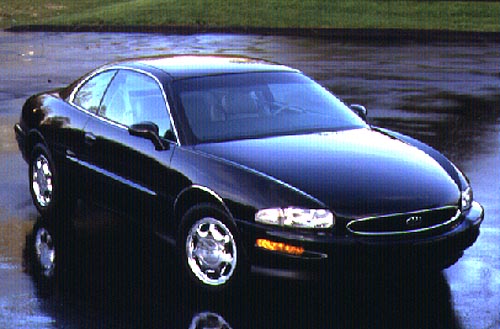
Online rumors already swirl around General Motors' Chairman and CEO, Rick Wagoner demanding a redesign of the concept car’s exterior in the 11th hour running up to the NAIAS - to make the car’s style "less retro" and more of an ‘interpretation’ of the unforgettable 60's Camaros. And that may very possibly be the problem. In recent years GM has almost has consistently failed to deliver the kinds of designs Americans have come to demand from their American car. While trucks have maintained the neutral stance that always made Chevy the choice of government agencies, GM cars in the last ten years have been renowned for their confusing design and polarizing looks. The ‘stretchy’ body-panel cladding of the Grand Prix and the rental-like ambivalence of late nineties’ Buicks came to replace the determined, function-driven designs of old-school GM staples.
The truck platform became the bread and butta of the product offerings and continued the downward spiral of design confusion. Pointless lumpyness and garbage can plastic misplaced on vehicles like the the early Avalanche assured that the conservative buyer on the lookout for his or her next grocery getter would be looking to Japanese rivals. They might stop to contemplate why a refrigerator built into the Pontiac Aztec’s center console should entice them to spend over $30K on the IHOP-shaped crossover, now relegated to the Edsel club (will be highly collectable for misguided, future, rich people). Meanwhile, Chevy badge heros like the Monte Carlo managed to miss all the marks buyers look for in a GT coupe, let alone the Monte. Front wheel drive and Lumina-derived re-design of the 1995 Monte Carlo assured that the drama and bad-ass cache of previous (83-88) MCs was replaced by a two-door rental car with low self-esteem and a 3. 8L. It was barely able to capitalize on the NASCAR tie-in, let alone the pedigree of Monte Carlos of the previous 25 years.
Platform sharing seems to dictate everything the General shoves onto dealer lots, with SUVs leading the pack of near-identical platform-shared derivatives. Chevy, GMC and Cadillac are still stamping their name and bolting-on slightly varying front clips to the rapidly ageing Tahoe/Suburban. The new bodystyle for Suburban clones offers a bit of hope for the platform’s skin problems but we can be assured that the re-design will spread to GMC and Caddy with damn-near no differences in the exterior (and GM plug-in luxury on the inside).
GM also seemed to use the nineties to forget a crucial reason Americans had always made room for a Chevy or an Oldsmobile in their driveways. Car shoppers, especially in snowless states were being left with no option but to look elsewhere if they were in the market for an inexpensive, rear-wheel drive car with decent power - the former calling card of Chevrolet. Unfortunately for GM’s financial situation, this also included police departments that were now forced to opt for the historically inferior Ford Crown Victoria, with its less powerful and less-reliable engine and infamous safety problems. The Crown Victoria’s design faults have been conclusively linked to at least 18 police office and state trooper deaths . But it was now the only game in town and the only alternative to  the smallish, front-wheel drive Impala which GM was trying to
 foist on law enforcement after they killed the Caprice in 1996. Even after an aggressive marketing campaign by Chevy, the 2000 Impala, another warmed-over Lumina never got mainstream take-up by departments counting on V8 power on the interstates. Cab companies were also left with no choice - and GM knew better than to attempt an Impala Taxi package.
Thus, the Camaro Concept, even when its distant relative hits showrooms in 2009, is unlikely to turn the confusion around. Camaro people will definitely snatch up whatever is on offer. And it's also likely that Camaro's reputation for being America's deadliest car will be resurrected too. But - just as marching bands do crap-all for winning the game - this thing will do little for regaining decayed market share for a car-maker that forgot about the car buyer.
As dozens of truck-platform products loose momentum - post $3.00/gallon - GM, their pensions burden and all, will only continue to struggle. With the only other GM concept introduced at the 2006 NAIAS being the Buick Enclave crossover, it’s clear that lessons aren’t being learned as thousands of GM workers continue to loose their jobs.
 Getting back to basics doesn’t have to mean ‘re-interpreting’60s’models but refocusing on making the relatively simple, never slow and always affordable cars we associate with General Motors. Certain GM dreams will never come true. A new Buick will never appeal to consumers under 50 until they offer something as single-minded and inspiring as any sixties' Riviera (without ‘re-interpreting’ it), still popular with under 30s today. Other GM aspirations are more realistic, like maybe making a Malibu into a car people would buy even if a Mazda 626 wasn’t more expensive. The success of the now-dwindling H2 proved that dropping truly different bodies onto an off-the-shelf platform can deliver success instead of consumers using their budget to decide which brand's Tahoe they'll drive.
But the bigger lesson has to be that GM will always be shoppers’ first stop for red-blooded, big 'o rear-wheel drive cars. Now’s the last chance to stop shoving these good people toward Ford and Chrysler showrooms.
Labels: avalanhe, buick, Cadillac, camaro, Caprice, cars, Chevrolet, chevy maibu, crown victoria, General Motors, gmc, Impala, Monte Carlo, pickup trucks, pickups, police cars, pontiac aztec, Suburban, suvs